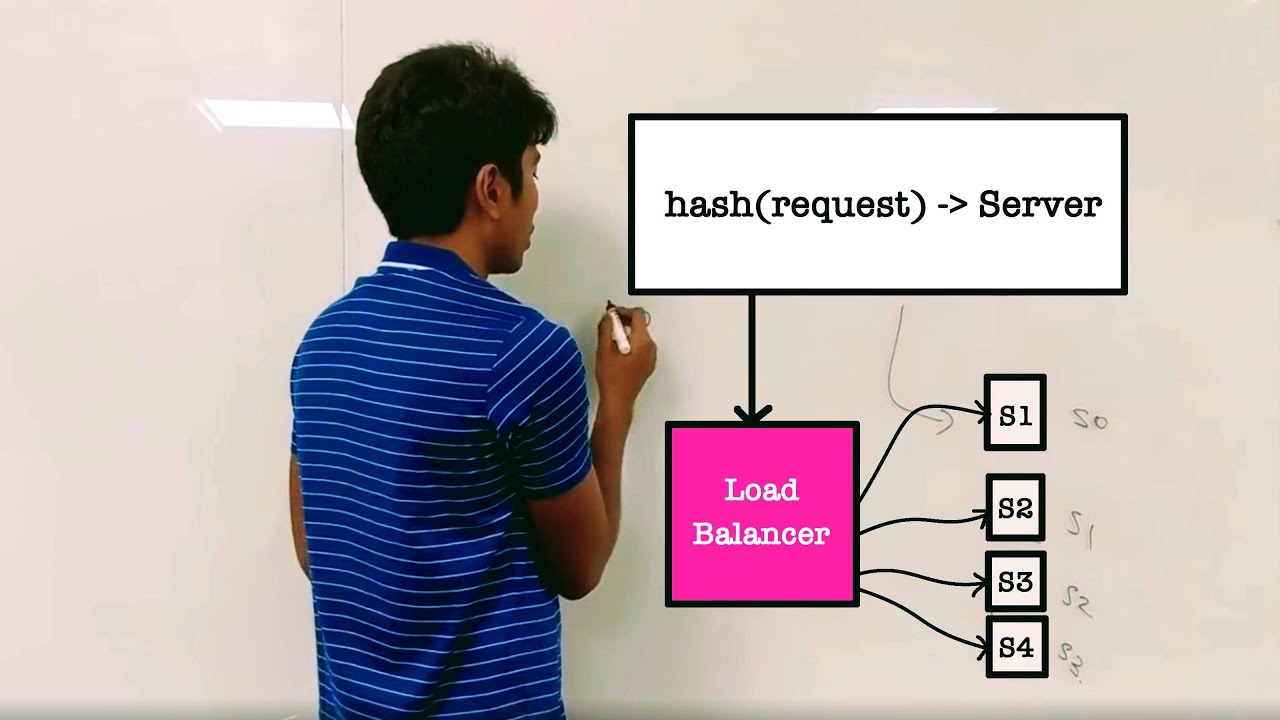
You know the technical material cold. You walk into the interview anyway — and ramble for 20 minutes about load balancers, never reach the deep dive, get flagged as "unfocused" in the debrief. Knowing system design is half the battle. The other half is performing it under time pressure, navigating ambiguity, knowing when to push back, knowing what to drop.
This page is the operating manual for the 60-minute window: what to say in the first 5 minutes, how to time-box, when to admit "I don't know," what scoring rubric interviewers actually use. The technical pages teach the material. This page teaches how to deliver it.
02
The first 5 minutes — frame the problem
The single most-failed phase. Candidates jump to architecture; interviewers think "no rigor."
What to actually do:
Restate the problem in your own words. "So you want me to design Twitter — specifically the home feed reading and posting flows. Is that right?" Confirms scope.
Ask about scale. "Roughly how many users are we designing for? 1M, 100M, 1B?" The answer changes everything.
Ask about features. "Should I focus on posting + reading, or also include search, DMs, ads?" Most interviewers want you to scope down.
State assumptions out loud. "I'll assume 100M DAU, mostly mobile, read-heavy 100:1, eventual consistency on feeds is OK." Get them to nod or correct.
By minute 5, you've earned credibility and bounded the problem. Now you can build.
03
The 60-minute time-box
Successful candidates run an internal clock and announce phase transitions. Approximate breakdown for a 60-minute interview:
5 min
Requirements + scope
5 min
Scale estimation
15 min
High-level architecture
20 min
Deep dive (ONE topic)
10 min
Tradeoffs / failure modes / scaling
5 min
Buffer + Q&A
Say out loud "I have about 30 minutes left, let me move to the deep dive." Interviewers love this — it shows self-awareness. If they want you to spend longer somewhere, they'll redirect.
04
The "I don't know" playbook
The interviewer asks: "How does Cassandra handle anti-entropy at the partition level when ring rebalancing happens mid-repair?" You don't actually know.
Three responses, ranked:
Worst: bluff. "Yeah so it uses a Merkle tree thing and it just kind of works it out..." — interviewer instantly notices. Hard signal: this candidate fakes when uncertain.
OK: surrender. "I don't know that off the top of my head." — neutral but flat. No partial credit.
Best: think out loud. "I don't know the exact mechanism, but here's how I'd reason about it: Cassandra uses Merkle trees for anti-entropy. If the ring rebalances mid-repair, the token ranges have shifted, so the comparison has to handle the new ownership... I'd guess Cassandra either pauses repair during rebalance, or it re-computes the Merkle tree on the new owner. I'd verify in the docs." — This is the senior-engineer answer. Reasoning from first principles + admission of uncertainty + plan for resolution.
Bluffing is the single most common reason candidates fail at staff+ levels. Senior interviewers can spot it instantly. They respect "I don't know but here's how I'd find out."
05
The actual scoring rubric
Interviewers at most FAANG companies use a rubric like this. Candidates who know it perform measurably better.
Dimension
What earns "Strong Hire"
What earns "No Hire"
Problem solving
Asks great clarifying questions; pushes back on bad requirements; recognizes when scope creeps
Jumps to architecture; doesn't ask about scale; over-engineers
Technical depth
Deep on at least one component; cites real systems + numbers; knows tradeoffs of every choice
Surface-level on everything; uses buzzwords without justification
Tradeoff reasoning
Every choice has "because X, accepting Y"; alternatives considered + rejected with reasons
"Just use Kafka" with no reasoning; defends choices without acknowledging downsides
Communication
Drives the hour; clear diagrams; phase transitions called out; listens to interviewer signals
Rambles; doesn't notice interviewer cues; defensive when challenged
"It works" is the bar; never thinks about what happens at 3am
The senior+ differentiator
What separates senior from staff candidates: senior candidates can describe a great design. Staff+ candidates make tradeoffs visible ("we picked this; here's what we gave up; in 6 months when we hit X, we'll need to do Y"). They sound like they've owned production systems, not just read about them.
06
Common failure modes
Skipping requirements. Diving straight into "I'll use a load balancer..." Interviewer immediately downgrades.
Over-engineering for hypothetical scale. "I'll use Cassandra and Kafka" for a problem that fits in one Postgres. Show you can match design to actual scale.
Going deep on everything. Burning 30 minutes on the API design; never reaching the deep dive. Pick ONE rabbit hole.
No numbers. "We'll cache it" — how big a cache? "We'll shard it" — how many shards? The numbers prove you're not hand-waving.
Defensive when challenged. Interviewer says "what if X?" — they're testing flexibility, not attacking. Engage: "Good point, I hadn't considered that. Let me think..."
Ignoring interviewer hints. They keep asking about consistency. They want you to discuss CAP. Take the hint.
No production thinking. Beautiful diagram; no thought to deploys, monitoring, oncall. "How would you debug this at 3am?" should always have an answer.
Time mismanagement. 50 minutes in, just starting the deep dive. Game over.
07
Practice tactics
Out loud, with a timer
Solo practice
Pick a problem (use the 31 in this portfolio). Set 60-min timer. Talk through end-to-end out loud. Record yourself. Watch back. Cringe. Improve.
Mock interviews
Realistic feedback
Practice with peers + paid services (interviewing.io, exponent.com). Real mock interviewer = catches subtle issues you can't self-diagnose.
Write designs as documents
Forces structure
For each problem, write a 1-page design doc the way Amazon does. Forces clarity that informal talking never does.
Read post-mortems
Learn from real failures
Cloudflare, GitHub, AWS publish detailed incident write-ups. Each is a free advanced lesson in distributed systems failure.
08
Apply to every problem
Use the framework on every problem in this portfolio. The 11 sections of each problem page mirror the 60-minute interview shape. Practice driving through them in order, with time discipline. Every concept page is the depth-on-one-thing you'd reach for in the deep dive.